The Bench Angle: What Six Minutes of Sitting Does to a Painting
Photo: Jim Osley , CC BY-SA 2.0, via Wikimedia Commons
There is a particular sound a gallery makes when someone decides to sit down. The slight creak of a wooden bench, the rustle of a coat being shifted, the soft thump of a bag being parked on the floor. It is not a dramatic sound. But it is the sound of someone choosing to stay. And in a small exhibition, staying is half the battle.
I have spent a lot of time on both sides of the room — installing shows, watching people arrive, and occasionally perching on whatever seating we could borrow from the church hall next door. The bench is an underrated piece of exhibition furniture. It does not get a label. It rarely gets a mention in the programme. But when it is there, and when it is in the right place, it changes the way a painting is seen.
The Standing Problem
Most gallery visits are conducted at a brisk walking pace. We come in, we scan the walls, we drift towards the tea urn. Standing is a transient state. It encourages a glance, a nod, a mental tick. Even a painting we like might only get twenty or thirty seconds before the next one catches our eye.
That is not a criticism of visitors. It is simply what standing does. The body is ready to move on, and the eye follows. A painting that needs a little time — a layered surface, a quiet colour relationship, a composition that unfolds slowly — can get lost in that shuffle.
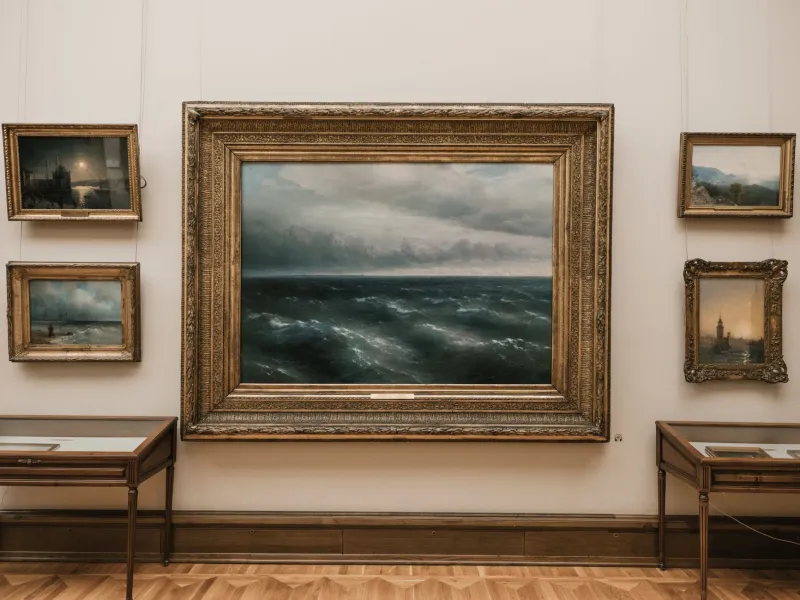
Sitting down interrupts the shuffle. It says: there is no rush. And a painting that looked one way from a standing position often looks quite different once you are at bench height, with your hands in your lap and nowhere else to be.
What the Bench Gives Back
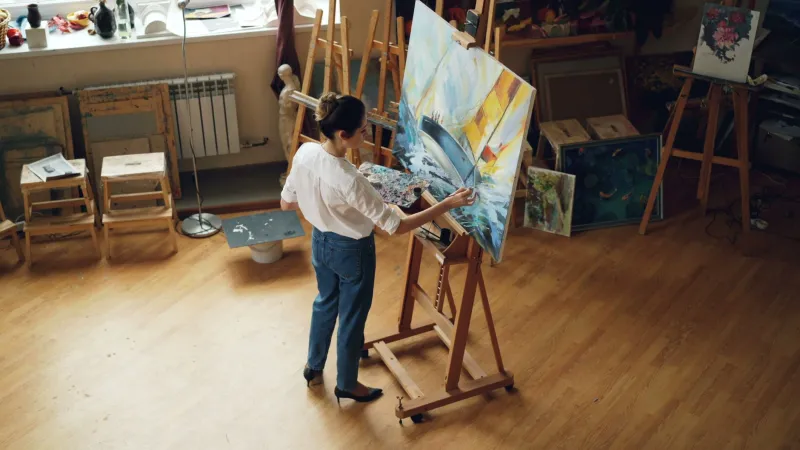
I noticed this first with my own work. A painting I had lived with for weeks in the studio — one I thought I knew inside out — suddenly offered up a new reading when I viewed it from a borrowed chapel bench. The greens in the background, which had felt a bit muddy from standing, resolved into something cooler and more delicate. The horizon line, which I had worried was too low, sat perfectly well from that lower viewpoint. Nothing had changed except my posture and my patience.
Colour is the obvious beneficiary. When you sit, your eyes have time to adjust and to compare. A red that seemed loud from the doorway becomes a quiet anchor. A grey that looked flat starts to show its shifts. Scale, too, behaves differently. Standing close to a painting, you are aware of its edges and its surface. Sitting a few feet back, you see it as an object in a room, which is how most people will eventually live with it.
Composition also loosens up. The paths your eye takes through a painting — the way a shape leads you towards a corner, the way a dark patch holds you in place — become more obvious when you are not shifting your weight from foot to foot. The bench gives the painting a chance to do its job.
Choosing a Bench for a Small Show
Not every exhibition has the space or the budget for seating. But small UK shows — village halls, parish rooms, community galleries, the kind of places where I have hung work with a spirit level and a borrowed step ladder — can usually find something. Here are a few practical notes from experience.
Height matters more than style. A bench that is too low makes visitors feel like they are crouching. Too high and their feet dangle. Aim for something around 45 centimetres at the seat, which suits most adults and lets people sit upright without strain. If you are borrowing from a church or a village hall, check the height before you commit.
Place it off the main thoroughfare. The bench should feel like an invitation, not an obstacle. Tuck it against a wall or in a corner where it does not block the flow of the room or the fire exit. A bench in the middle of the floor becomes a piece of sculpture that people have to walk around. A bench against the wall becomes part of the room.
Give it a job. A bare bench is fine, but a bench with a couple of folded blankets or a small stack of catalogues feels intentional. It says: this is for you. It also softens the look of a hard wooden seat, which matters in a cold village hall in November.
Think about sightlines. Sit on the bench yourself before the show opens. What can you see? Is there a painting directly opposite that benefits from the view? Is there a glare from a window that hits you in the eye? A bench that faces a blank wall is a missed opportunity. A bench that faces three good paintings is a gift.
From the Other Side of the Room
When I am invigilating a show — which usually means sitting at a small table near the door with a flask and a notebook — I watch what the bench does. People who sit down tend to stay for eight or ten minutes. They look at fewer paintings, but they look at them longer. They often turn to whoever they came with and say something. They point. They lean forward. They get up and walk to a painting they had not noticed before, because sitting gave them time to notice it.
The bench also changes the atmosphere. A room with a seat feels less like a corridor and more like a place. It gives permission to linger. And lingering is what small exhibitions need most. You cannot compete with the big galleries for footfall or spectacle. But you can offer something they sometimes struggle with: a bit of quiet, a bit of time, and somewhere to put your coat.
A Small Invitation
If you are putting on a show this year — or if you are visiting one — look for the bench. Sit down. Give a painting six minutes instead of sixty seconds. You might find that the work you walked past on the way in is the one you remember on the way out. And if you are organising a small UK show, see what you can borrow. A chapel bench, a folding chair, a sturdy pew — none of them are glamorous, but they all do the same job. They let a painting be looked at properly. And that, in the end, is what we are all here for.