The Empty Hook: What It Takes to Send a Painting Out on Loan
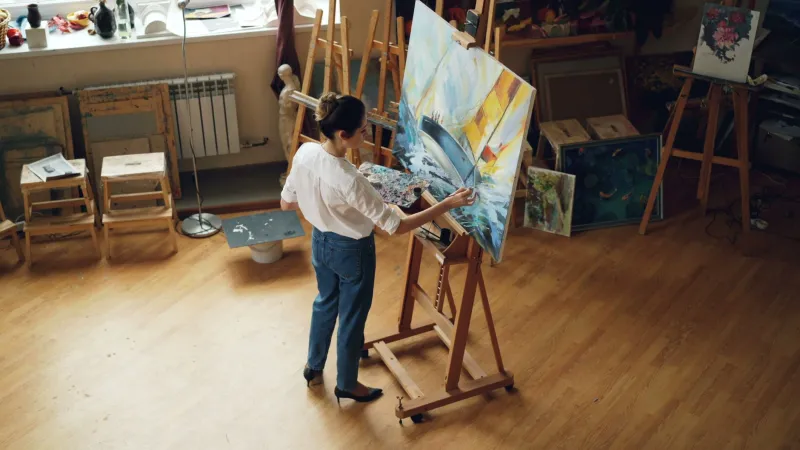
A loan request never arrives at a convenient moment. It turns up in the inbox between a newsletter and a reminder about frame samples, polite and specific: would you consider lending a painting for an exhibition in another UK city? The answer is usually yes, eventually. But the journey from that email to an empty hook on the studio wall is longer than most people imagine, and quieter too.
The Email That Starts It
A good loan request tells you the basics without making you dig. Which work, which venue, which dates, and why this painting in particular. It should also mention insurance, transport and whether the exhibition has a catalogue. If any of that is missing, it is not rudeness to ask. A loan is a partnership, not a favour posted in a jiffy bag.
I have learned to reply in two stages. First, a warm yes in principle, because that is what I mean. Second, a list of questions before anything is confirmed. What is the display period, including installation and de-installation? Who is the courier? Is the venue environmentally controlled? Will the work be in a case or open on the wall? None of these questions are suspicious. They are just the scaffolding of care.
The paperwork matters, but it should not feel like a legal thriller. A loan agreement, a condition report, an insurance certificate and a named contact at the venue are the foundations. I like to know who will actually be in the room when the painting is unwrapped. Job titles are useful; a human name is better.
The Condition Report Is a Love Letter to Detail
Before a painting leaves, it gets looked at in a way it has not been looked at since it was finished. The condition report is not glamorous. It is close-up photographs under raking light, notes on the frame corners, the back of the stretcher, the little scuff on the lower edge that has been there since the studio. It records what is already true so that everyone can tell what is new later.
This is where a painter has to be honest. That tiny mark near the signature? It was there before. The faint shine on the dark passage of paint? That is the surface, not damage. Writing it down protects the work and the relationship. It also stops a future conversation from becoming a guessing game.
For UK loans, I also ask about hanging methods. Will it go on a picture hook, a security fixing, a rail? Will the frame take the weight? A painting that looks robust on an easel can feel surprisingly fragile once it is in someone else's building. The condition report is a shared language for that fragility.
Crating Is a Small Architecture Project
A fine art crate is not a box. It is a small building with corners, foam, and opinions. The painting travels inside a custom fit, usually with glassine or tissue against the surface, corner protection, and a lid that does not rely on hope. For a UK journey, weather is part of the design. A dry van in July is one thing; a cold, damp morning in November is another.
I have learned to book the courier before I start packing, not after. Fine art transport is its own trade. A regular van company may be perfectly good at furniture, but paintings need a tail lift, straps, blankets and someone who understands that the crate is not a shelf. If the venue has steps, narrow doors or a lift that was built for a different century, that needs saying early.
Packing takes longer than it should. The first time, I did it in an afternoon and felt efficient. Now I allow a day, maybe two, because the last thing I want is to be taping a corner at ten minutes past collection. The crate gets photographed. The seals get photographed. The courier signs. Then the studio has a gap where the painting used to lean.
The Studio Wall Adjusts
People assume the strange part is the private view or the insurance. For me, it is the wall. A painting that has been in the studio for months leaves a rectangle of slightly different colour, a hook with nothing on it, and a space that the eye keeps checking. Other paintings seem to shuffle around it. The room is not emptier, exactly. It is reordered.
There is trust in that gap. You are handing a piece of work to people who will look at it in a building you may not visit until opening night. You are also handing over a small part of your judgement. Will it read well in their light? Will the wall be too busy? Will the label spell your name correctly? These are not artistic crises, but they are real.
I try to visit if I can. Not to hover, just to see the painting in its temporary home and to meet the people who will be living with it for a few weeks. A loan exhibition is a collaboration, even when the painter is not in the room.
When It Comes Back
The return is its own ritual. The crate comes back, sometimes with a different set of stickers. The painting is unwrapped slowly, checked against the condition report, and left to settle before it goes back on the wall. There is usually a minor mark on the frame, or a faint dust line, and usually an explanation. That is normal. What matters is that the conversation is calm and documented.
After a loan, I update my own records. Photographs, dates, venue, any notes. It is a small archive of where the work has been. The painting looks much the same, but I look at it differently. It has had a life outside the studio, and it has come home.
What I Ask First Now
Before agreeing to any loan, I want the dates, the insurance, the courier, the condition report, the hanging plan and the return address. I want a named person who will answer an email. I want the venue to know that a painting is not a poster and a crate is not a suitcase.
Then I say yes, because the work was made to be seen. The empty hook is part of the job. It is also a reminder that a painting can travel without losing its centre, as long as everyone involved treats the loan like what it is: a temporary act of trust.