The Last Look Before the Wrapping Paper: A Painting’s Leaving Portrait
Photo: stacey svendsen from a little bit of everywhere, CC BY 2.0, via Wikimedia Commons
There is a particular moment in the studio when a painting stops being mine. The final varnish has settled, the edges are tidy, and someone — a buyer, a gallery, a framer — is about to carry it out of the door. Before the bubble wrap comes out, I take its leaving portrait. Not for Instagram. Not for a glossy brochure. For the painting’s own file.
That distinction matters. A leaving portrait is a record of condition, colour and character at the point of departure. It is part of the work’s care, not a marketing afterthought. And if you are the person receiving the painting, it is something you are entitled to ask about.
The record is part of the care
Paintings travel. They move from a cool studio to a warm hallway, from a framer’s bench to a gallery wall, from one owner to another. Over years, a surface can shift, a frame can pick up a knock, a canvas can develop a slight draw. Most of the time none of this is dramatic. But when questions arise — about insurance, about condition, about whether a mark was there at handover — a good photograph is the calmest possible answer.
I think of the leaving portrait as a handover document. It protects the artist as much as the collector. It also gives the painting a second life in reproduction: for catalogues, for future exhibition proposals, for the odd request from a magazine. A poor phone snap taken under a ceiling light is not much use for any of that.
Set the painting, not the studio
The main shot should be straight, square and quiet. I clear a wall, hang the work at a comfortable height and put the camera on a tripod. The lens sits level with the centre of the painting, not looking up or down. If the camera tilts, the rectangle becomes a trapezoid and the painting looks slightly wrong — which is exactly what you do not want in a record.
Daylight is lovely, but direct sun is not. I use soft, indirect north light and turn off any mixed bulbs that might throw a colour cast. A plain background helps, though a modest amount of studio wall is fine. What matters is that the painting fills the frame cleanly, with a little breathing space around the edges. No easels, no coffee cups, no dusty skirting boards creeping into the corners.
Raking light is a tool, not a mood
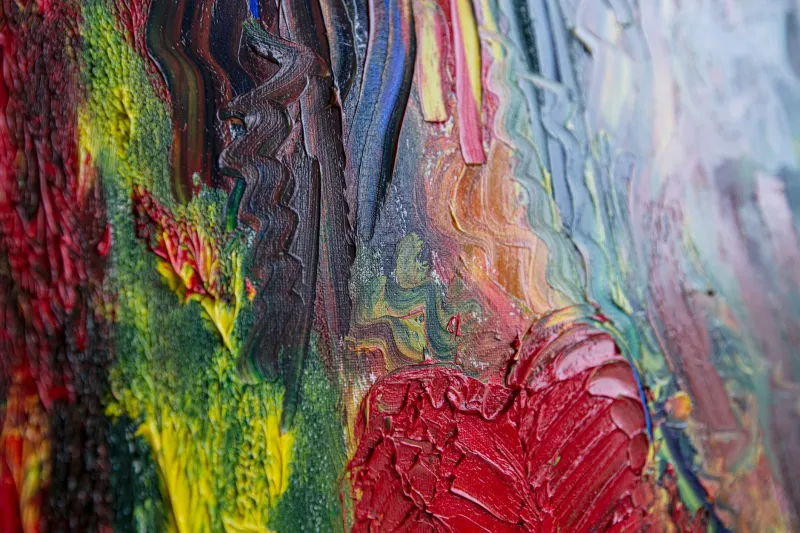
A straight-on photograph shows colour and composition. It does not show texture. For that, I take a second set of images with raking light — a lamp or window light coming in from the side at a low angle. This picks out impasto, canvas weave, brush marks and any subtle surface variation.
Raking light is wonderful, but it can lie about colour. It exaggerates shadows and can make a warm painting look cooler than it is. So I keep the raking shots separate from the main record. They are for detail, not for judging the whole. A collector who receives both a flat shot and a raking shot has a much fuller picture of what they own.
Get the colour honest
Colour is where photographs most often go wrong. A painting can look too blue on one screen, too orange on another, too contrasty in a phone gallery. I use a grey card in the first frame of every session, shoot in raw and set white balance from the card rather than trusting the camera’s guess. My monitor is calibrated, and I compare the edited file against the painting in the same soft light.
I am not trying to make the painting look better than it is. I am trying to make it look accurate. That means resisting the urge to push saturation or crush the shadows. A good leaving portrait should be slightly boring in the best way: faithful, even, and useful.
Crop like you mean it
A single overall shot is not enough. I take detail crops of the corners, the signature and date, any areas of heavy texture, and the frame’s joints if the work is framed. These crops are not glamour shots. They are evidence. They show how the paint sits, how the edges are finished, and whether the frame has any small scuffs at handover.
The reverse deserves a portrait too. I photograph the back of the canvas or panel, the stretcher bars, any labels, the hanging hardware and the frame’s backing. If there is a certificate or a gallery sticker, it goes in the record. Years later, that unglamorous shot of the back can be more useful than the front.
Build a folder that a stranger could use
A folder of unnamed images is only marginally better than no folder at all. I use a simple naming system: title, year, medium, dimensions, and the date photographed. Inside the folder go the master files, a set of high-resolution JPEGs, a note of the colour profile, and a short condition note. I keep one copy on a studio drive and one in cloud storage. A physical print of the overall shot goes in the paper file.
The point is not bureaucracy. It is making the record usable by someone who is not me. If a gallery asks for an image in three years, I should be able to find it in minutes. If a collector asks what the painting looked like before framing, I should be able to show them.
What a collector should ask for
If you are buying a painting, it is reasonable to ask whether the artist has a photographic record. You do not need to make it a grand demand. A simple question works: do you have a high-resolution image of the work before it left the studio, and could I have a copy for my file?
What should arrive? Ideally a colour-managed overall shot, a couple of detail crops, a photograph of the reverse, and a note of the dimensions and medium. If the work was framed after the photograph, ask whether there is a record of it unframed as well. This is not fussiness. It is the same instinct that makes you keep the receipt for a good piece of furniture.
The last look
Once the photographs are taken, I look at the painting one more time without a camera in front of me. That sounds sentimental, but it is practical too. The camera sees texture and colour. The eye sees whether the thing is finished. The leaving portrait should never replace that last human look.
Then the wrapping paper comes out, the corners get protected, and the painting begins its journey. The file stays behind — quiet, plain, and ready. A painting’s leaving portrait is not the most exciting part of studio life. It is simply one of the most useful. And for the person on the other end, it is a small, sensible piece of care they should feel free to ask for.