The Cappuccino Critique: When a Painting Meets People Who Didn’t Come for Art
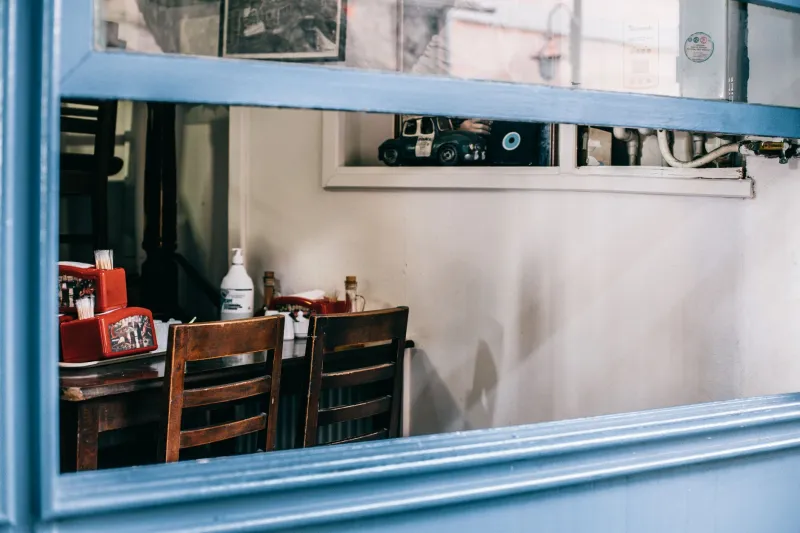
Most of my paintings first meet the public in rooms where people have made a decision to look. They have bought a ticket, checked the opening times, or at least wandered in because a poster caught their eye. A café is different. Nobody arrives for the art. They arrive for coffee, a slice of something, a dry seat and perhaps a quiet half-hour. The painting is simply there, sharing a wall with the specials board.
That is exactly why I said yes when a small hare study of mine was offered a spot in a local café. It was not a grand gesture. The wall was narrow, the light was mixed, and the painting was modest enough to carry in one hand. But it gave me something a formal exhibition rarely does: an honest account of what happens when art meets an audience that is entirely off guard.
The Room Sets the Rules
In a gallery, the room tells people how to behave. There is usually a desk, a list of works, perhaps a invigilator with a patient expression and a stack of catalogues. In a café, the rules are different. Cups clatter. Chairs scrape. Someone stands directly in front of the work to read a message on their phone. A dog may be tied to a table leg nearby.
At first, I found this slightly alarming. Then I found it useful. The painting was no longer protected by the hush of a white cube. It had to compete with steam, chatter and the British weather doing its usual work at the window. If it still held attention, it was holding it on its own terms.
The biggest lesson was about light. Gallery lighting can flatter almost anything. Café lighting is a lottery. My little hare sat under a warm pendant for part of the day and then fell into a dull corner when the sun moved. The varnish caught a glare at lunchtime. None of this ruined the painting, but it changed it. It made me think harder about how much contrast a work needs if it is going to be seen in ordinary, imperfect conditions.
What the Off-Guard Comments Taught Me
The remarks were not the ones I usually hear at a private view. Nobody said anything about brushwork. Nobody asked about the palette. One person asked if the hare was a rat. Another asked whether it was for sale before they had looked at it properly. A third studied it for a while and said, simply, that it made them feel like they were standing in a field. That last comment stayed with me longer than most gallery praise.
Off-guard audiences respond to subject matter first. That should not be a surprise, but it is easy to forget when you spend your days thinking about edges, glazes and the precise temperature of a grey. In a café, the story of the painting does more of the inviting than the technique. The hare was recognisable, slightly familiar and just odd enough to prompt a question. That was enough.
The labels were another matter. I had provided a small card with the title, my name and a website address. It was read by some people and ignored by most. In a gallery, a label is part of the choreography. In a café, it is competing with the menu. I have since made my labels larger, simpler and more robust, with the title and artist name at the top. Anything too delicate or too wordy will be lost between the sugar sachets and the napkin dispenser.
The Library Variation
A library is another useful testing ground, though it comes with its own habits. People linger there in a different way. They are quiet, but not necessarily attentive. They read notices. They queue for the photocopier. They sit with children and shopping bags. A painting in a library has to work at close range and at a glance, which is a good discipline for any artist.
The library also taught me that context changes interpretation. A hare in a café feels like a bit of countryside brought indoors. A hare in a library feels more like a character from a story. Same painting, different room, different conversation. That is not a flaw. It is one of the reasons to let work travel beyond the studio and the formal show.
What It Actually Gave Back
Showing in a café did not sell the painting immediately. It did not produce a tidy list of new collectors. What it gave me was a set of observations I could not have manufactured in a gallery: which details people noticed, how far away they stood, whether the frame helped or hindered, and how quickly the work became part of the room.
It also gave the painting a life between exhibitions. That matters. A finished work can become strangely static once the show comes down. Loaning it to a local space keeps it in circulation, however modestly. It reminds people that art is not only for dedicated rooms with private views and neatly printed catalogues. Sometimes it belongs beside the cake stand.
Before You Offer the Wall
If you are a UK artist thinking of hanging work in a café, library or similar public space, a few practical questions are worth settling before you drill anything:
- Who is responsible for insurance while the work is on display?
- Is there a written loan agreement, however short, covering dates, condition and return?
- How will the work be hung, and will the fixings suit the wall without causing damage?
- Is the lighting stable enough, or will the work sit in glare or gloom for part of the day?
- Will there be a label, and who is responsible for making and maintaining it?
- Is the work for sale, and if so, how will enquiries be handled?
- What is the footfall like, and is the wall safe from spills, condensation or constant knocks?
- Who will check the painting during the loan, and how often?
The answers do not need to be elaborate. They just need to be clear. A café wall is not a lesser space, but it is a different one. Treat it with the same care you would give a gallery, and it can reward you with something better than polite applause: a genuine, unguarded response from people who did not know they had come to see a painting.