After the Private View: A Calm Guide to Buying Art in the Weeks That Follow

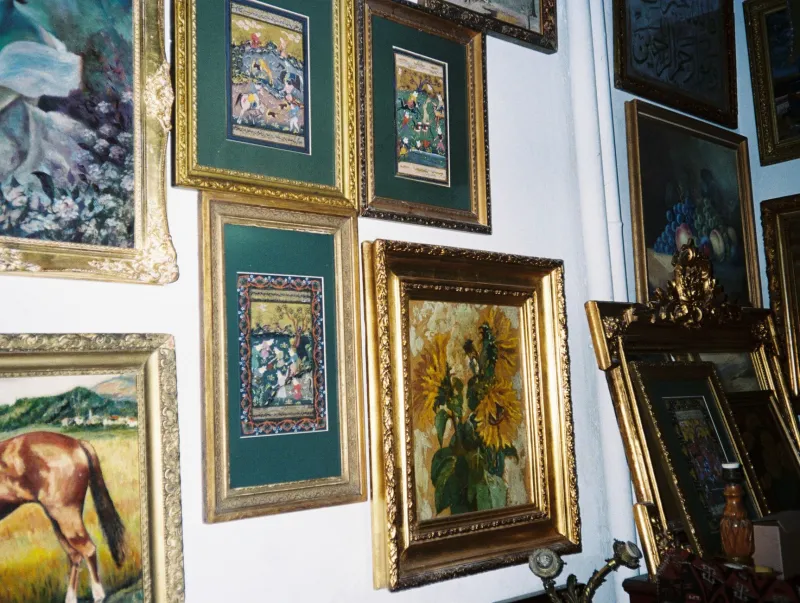
Photo: Mike Searle, CC BY-SA 2.0, via Wikimedia Commons
The private view has its own weather: warm wine, bright walls, someone saying they love the one by the door. Then the glasses are cleared, the gallery rehangs or empties, and the real relationship with a painting begins. For UK collectors, the weeks after an exhibition are often when the useful decisions happen — not in a rush, and not under canapé lighting.
Let the preview-night buzz settle
A preview is designed to make everything look inevitable. The lighting is flattering, the room is full, and there is a certain social pull towards saying yes before the moment passes. None of that is a reason to distrust your instincts, but it is a reason to give them a few days.
Wait until the week after. Look again at the phone photo you took, or the image from the gallery’s website. Notice which work you thought about on the train home, or while making tea. That is usually the painting worth revisiting. If you have forgotten it entirely, that is useful information too.
Go back for a second look if you can
Most galleries are happy to arrange a quieter viewing after opening hours or on a weekday morning. Take a notebook, or use your phone to note the title, size and price. Stand at different distances. Look at the edges and the back of the canvas if it is unframed. Ask whether the work is still available, and whether it has been reserved.
If you cannot get back to the gallery, ask for a short video taken in daylight as well as under the gallery lights. A painting is not a flat JPEG. Scale, surface and colour all change when you see them in the flesh.
Ask the unglamorous questions
This is the part that separates a nice evening out from a confident purchase. Ask about framing: is it included, and what kind of glazing does it use? If the work is on paper, is it conservation mounted? Will it need UV-filtering glass? Ask about care: dust with a soft brush, keep it away from radiators and direct sun, and avoid hanging it in a bathroom or kitchen where steam will get to it.
If the painting is older or second-hand, ask for a condition report. Ask how it should be transported. Ask about provenance if that is relevant. These are normal questions, not signs of suspicion. A good gallery or artist will answer them plainly.
Understand what follow-up from the artist actually means
After a sale, artists often send a short note with care instructions, hanging suggestions or details about the materials. Some send a studio newsletter now and then. This is not pressure. It is usually just the artist wanting the work to settle well into its new home.
If you are still deciding, it is fine to say so. A good artist would rather you take your time than talk yourself into something. The artist–collector relationship works best when it is not treated as a countdown timer.
Arrange a home viewing or a trial hang
Some galleries offer approval periods; some artists will arrange a home viewing within a reasonable distance. Ask about insurance and handling before anything leaves the gallery. If a trial hang is possible, make a paper template to the exact size and tape it to the wall for a day or two.
Look at the space at different times: morning light, afternoon, evening lamp. A painting that holds its own at 8am and again at 8pm is a very good sign. If it only works under one kind of light, that is worth knowing before it becomes your problem.
Is a commission the next step?
A commission can be a lovely way to mark a specific wall, a specific room or a specific moment. It is less lovely when it is really an attempt to order an exact copy of something that already exists. Talk about size, palette, mood and timeline. Ask how many revisions are included, how the deposit works, and who arranges framing and delivery. Get the important points in writing, even if the tone stays friendly.
Be honest about budget. A commission is a conversation, not a vending machine. The best ones leave room for the artist to make the painting they actually know how to make.
The quiet weeks count
Collecting is not just a transaction at the till. It is learning how you look, what you keep returning to and what you want to live with. If you missed the exhibition, ask what remains and whether there is a waiting list for similar work. If you bought something, send the artist a photo of it hanging — most of us genuinely like seeing where a painting ends up.
The finish line is not the preview night. It is the morning you walk past the painting and still stop.