The Wall Test: What Survives the Studio, the Frame and the Final Hang
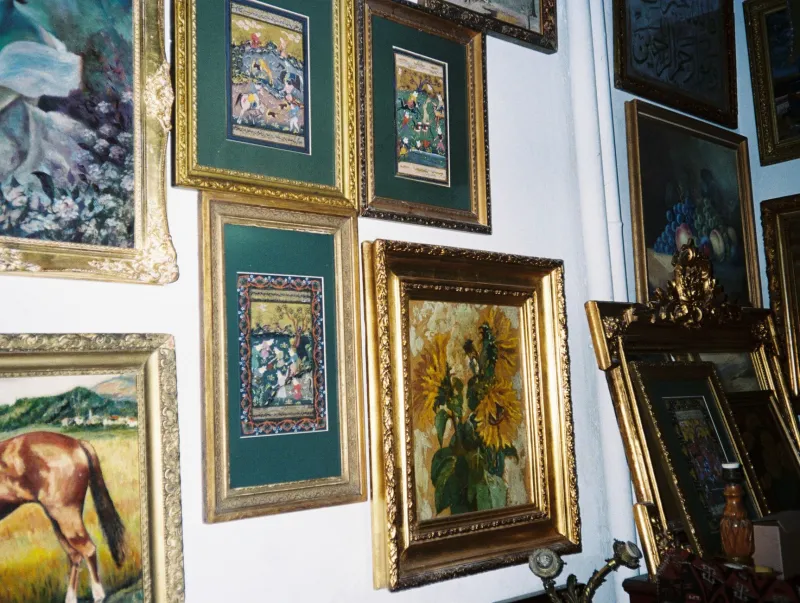
An exhibition is not a studio tour with better lighting. It is a room with a job to do. Ahead of the next exhibition cycle in 2026–27, I have been living with a larger group of paintings than usual, and the wall test has become the most useful tool I have. It is simple: put the work where you can see it every day, then wait. The paintings that survive are not always the ones I expected.
Living with the work
The first stage is deliberately unglamorous. Paintings lean against the studio wall, sometimes for weeks. I move them around, swap them over, and see them in different lights. A painting that looked strong on the easel can go quiet when it is seen from across the room. Another that seemed modest can start to hold its own.
This is why the studio is not the same as a gallery. In the studio, I am looking at the work as a maker. In the gallery, visitors will look at it as a room. The wall test is my attempt to close that gap. If a painting cannot survive being seen every day, it is unlikely to survive being seen by strangers.
The three-question filter
When the group is still too large, I use three questions. First, does the painting hold the room? That does not mean it has to be loud. It means it has to have enough internal pressure to keep a viewer standing there. Second, does it earn its place? A show can carry a few quiet works, but every painting needs a reason to be in the room rather than in storage. Third, does it talk to the others? Some paintings are good on their own but repeat what another work is already saying.
Those questions usually cut the list down quickly. The paintings that remain are not necessarily the most finished or the most dramatic. They are the ones that can carry the idea of the show without over-explaining it.
Sequencing is not ranking
Once the final group is close, the real work begins: sequencing. Hanging a show is not a matter of putting the best painting in the middle and arranging the rest around it. It is closer to editing a piece of music. You need rhythm, pauses and a sense of direction.
I think about scale first. A large painting can dominate a wall, but it can also flatten the works around it if there is no breathing space. Then I think about colour. Too many similar tones can make a room feel static, while a sudden shift can wake a viewer up. Finally, I think about subject and mood. The hare paintings, for example, do not all need to sit together. Sometimes a hare painting works better next to a landscape that shares its colour, rather than next to another hare.
Frames, titles and the small decisions
Framing is part of the curatorial thinking, not an afterthought. A frame can act as punctuation. A simple oak frame might let a painting sit quietly, while a darker frame can give it more weight. I try not to let the frame do too much work. The painting should still be the thing you notice first.
Titles matter too. A good title gives a viewer a way in without closing down the painting. A bad title explains too much. I often test titles by saying them aloud in the studio. If a title sounds like a caption, it probably needs another look.
The ones that stay home
Not every painting that stays home is a failure. Some works are simply wrong for the room, the sequence or the moment. A painting might be too raw, too resolved, or too close in feeling to another work. Keeping it back is not a rejection. It is a recognition that a show has its own logic.
This is one of the harder parts of exhibition making, especially when a painting has taken months to finish. But a coherent show is not a collection of everything. It is a selection. The works that stay home will often find their place in a later exhibition or a different context.
What visitors and collectors can look for
For gallery visitors, the wall test is a reminder that exhibitions are made, not just assembled. When you walk into a room, look at how the paintings are spaced. Notice where your eye is led. Ask yourself why one work sits next to another. Those decisions are not accidental.
For collectors, the wall test is also practical. A painting that works in a studio may need a different wall, a different light or a different neighbour at home. Buying a painting is not just buying an object. It is buying a relationship with a room.
The 2026–27 cycle
As the next exhibition cycle in 2026–27 takes shape, I am trying to keep the wall test honest. The final cut will not be the group of paintings that looks most impressive in a photograph. It will be the group that makes the best room: clear, alive and full of small decisions that a visitor may feel before they notice.