What the Finished Painting Is Sitting On
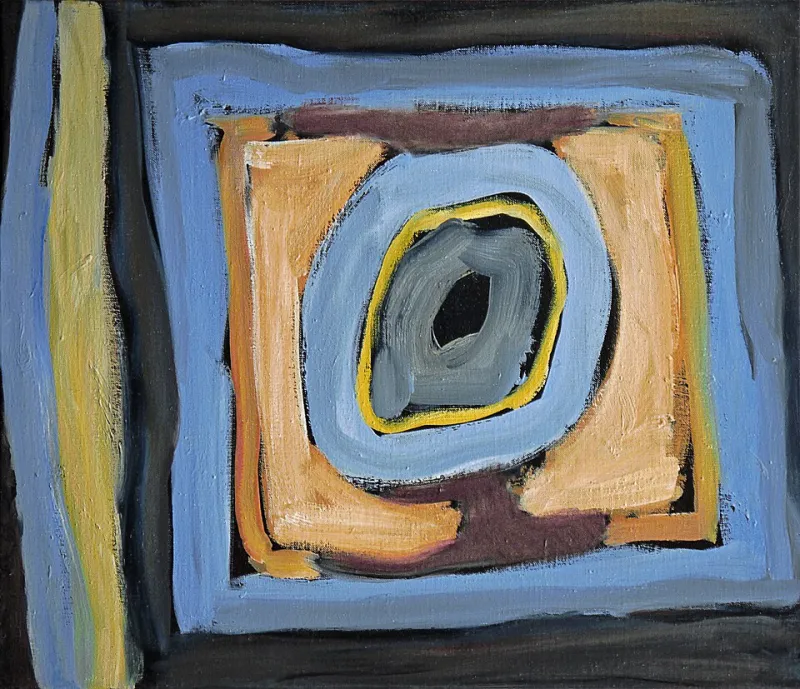
Photo: Fons Heijnsbroek, CC0, via Wikimedia Commons
There is a painting leaning against the studio wall at the moment, finished enough that I have stopped arguing with it. From the front it looks settled: a hare held in a pale field, a few scratchy marks of grass, a sky that has been adjusted more times than I care to count. From the side, under the edge of the stretcher, you can still see a sliver of the warm ochre ground I laid down before any real decision had been made. That sliver is the part nobody will buy. It is also the part I photograph first.
The warm ground and the first mark
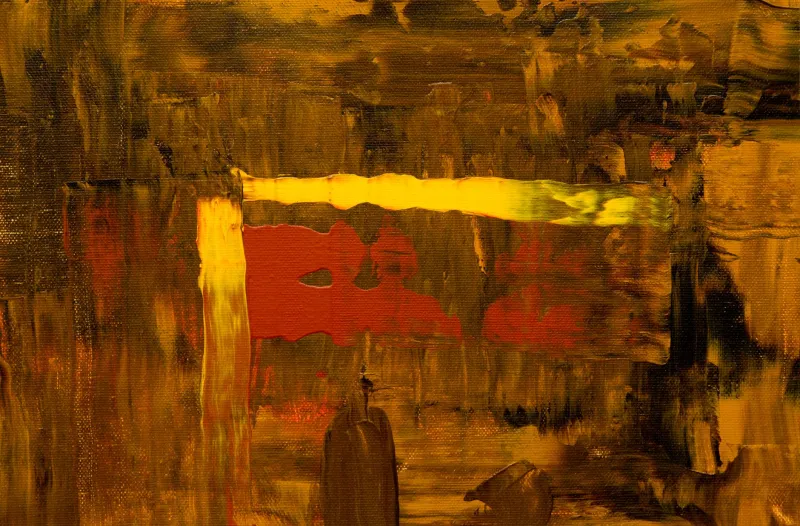
Most of my paintings begin with a ground that is not white. A thin wash of yellow ochre, sometimes raw umber, sometimes a mix that looks like weak tea. It is not a dramatic gesture. It is closer to putting the kettle on. But a warm ground changes everything that follows: it makes the blues sit up, it stops the whites from feeling cold, and it gives the whole canvas a sort of internal glow before I have earned it. In a British studio, where the light can be grey for days, that bit of warmth is practical as well as pleasing.
I used to think of the underpainting as preparation. Now I think of it as the first conversation. The ground answers back. If I paint a hare on a warm surface, the edges of the fur pick up a little heat. If I paint the same hare on a stark white canvas, the whole thing feels more clinical, more like an illustration than a living thing. Same drawing, different atmosphere. Collectors often talk about colour as if it lives on the surface. A lot of it actually lives underneath.
The sketch that is not really a drawing
Before the proper painting starts, there is usually a rough map. Charcoal, a thin brush, sometimes just a thumbprint of paint where the head should go. It is not a drawing in the tidy sense. It is a set of instructions to myself: hare here, horizon there, leave this patch alone. Most of it will be covered. Some of it will be deliberately left showing through, like a bit of undergrowth beneath a hedge.
I photograph these stages because they disappear quickly. Once the mid-tones go down, the first sketch becomes a rumour. Once the final glazes go on, it is archaeology. I have a folder on my phone called Underpaintings, which is not a glamorous name but does exactly what it says. There are close-ups of ochre grounds, smudged charcoal hares, and one canvas where I clearly changed my mind about the composition three times before settling on the version that now hangs in a hallway in Norwich.
That abandoned composition matters. I can still see the ghost of a second hare in the lower corner of one painting, a shape I scrubbed back and painted over. Nobody else notices it unless I point it out. But I know it is there, and I think the painting knows too. It gives the surface a slight hesitation, a sense that something was considered and rejected. Collectors who understand that layers exist tend to look at finished work with different eyes. They stop seeing a flat image and start seeing a set of decisions.
What gets buried and what survives
Not everything hidden stays hidden. A warm ground can peek through at the edges. A rough sketch can stiffen a line. An abandoned shape can make the final image feel more deliberate, because the space around it has been rearranged. I like that about painting: it is one of the few things that can be both finished and full of evidence.
A while ago I made a small landscape with a hare moving through it. The first hour was all about the horizon. I put it high, then low, then high again. The final painting has the horizon roughly where it started, which sounds like a waste of an afternoon. It was not. The lower horizon left a faint band of warmer ground along the top edge, and that band now does a job I could not have planned. It holds the sky in place. If I had not made the wrong decision first, the right one would not have had anything to push against.
This is the sort of thing I mean when I say the first hour quietly shapes everything. It is not mystical. It is just cause and effect, happening in paint. A choice about the ground affects the colour of the sky. A choice about the sketch affects the weight of the hare. A choice about what to leave bare affects where the eye rests. By the time the painting is finished, those choices are no longer visible as choices. They are just the way the picture behaves.
Why collectors look differently
I do not think collectors need to know every technical step. You do not have to understand how a house is built to live in it. But there is a difference between looking at a painting and looking into one. When someone knows that a warm ground is under the cool grey, or that a hare was moved three times before it settled, the finished work becomes less of a single image and more of a record of attention.
That is why I sometimes show the underpainting photographs during studio visits. Not as a trick, and not to make the final painting seem cleverer than it is. More as a way of saying: this is what the surface is sitting on. It helps people see that a painting is not a photograph of a hare. It is a stack of decisions, some of which were later covered up. The covered-up ones are still doing work.
If you are buying art, it is worth asking about process. Not in a forensic way, just with curiosity. What was the ground? Did the composition change? What got painted over? The answers will not tell you whether you like the painting, but they will tell you something about how it was made. And that often changes how it feels to live with it.
The photographs I keep
My Underpaintings folder is not an exhibition. It is a working record, closer to a studio diary than a portfolio. I keep it because memory is unreliable in the way all painters know: the painting you thought you made is rarely the painting in front of you. The photographs remind me that the finished canvas was once a rough, warm, uncertain thing. They also remind me to slow down at the start, because the first hour is not a preliminary to the real work. It is part of the real work.
The painting against the wall will go off to a frame soon, and then to a wall, and then into someone else's life. The ochre edge will be hidden by the moulding. The charcoal sketch will be buried under layers of paint. But it will all still be there, holding the surface up. That is the bit I photograph before it disappears. Not because it is secret, but because it is the part of the painting that keeps quiet and does the listening.