Little Rooms, Big Presence: Living with Small Paintings
Photo: Federal Bureau of Investigation, Public domain, via Wikimedia Commons
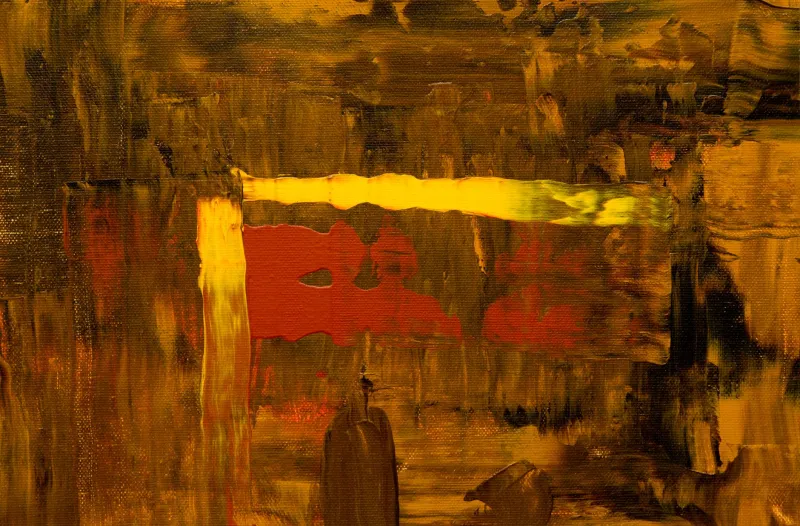
There is a corner of the studio where the small paintings gather. Boards no bigger than a paperback, canvases that fit under one arm, panels that have been worked and reworked until the surface has a quiet sort of density. Visitors often drift towards them last, then lean in first. That is the whole point. Small paintings ask for a different kind of attention, and they repay it.
Why the small ones get made
A small painting is not automatically a study. Some are, of course. But many begin as proper works with their own ambition. The difference is one of proximity. On a large canvas you can step back, wave an arm, make a broad decision and refine it later. On a small board, every mark is close to every other mark. There is nowhere for a lazy edge to hide. You work with a smaller brush, a tighter wrist and a sharper sense of economy.
I like that pressure. A little painting can hold a whole sky, a hedgerow, a hare's ear, a slice of coast, but it has to do so without shouting. The composition has to be clear from across a room and rewarding from a foot away. That double life is the challenge. It is also why small work can feel surprisingly generous. You are not buying a fragment of a bigger idea. You are buying the whole thing, compressed.
The frame is half the conversation
Small paintings are peculiarly sensitive to framing. A heavy moulding can crush them. A vast mount can make them look like a stamp lost in an envelope. At the same time, a skinny frame with no breathing room can make the work feel mean. The useful rule is proportion, not fashion. Give the painting enough space to sit comfortably, then stop.
For works on board, I often favour a shallow float mount in a simple tray frame, so the edge of the panel remains visible. For works on paper, a mount with a generous but not overwhelming border can give the image a stage. Glass or no glass depends on the medium, but avoid anything that creates a hard, cold shine over a delicately worked surface. In the UK, a good local framer is worth their weight in gold. Take the painting with you if you can. Hold up samples. Look at the frame in daylight, not just under shop lights.
Hanging in homes that are actually lived in
Most British homes are not galleries. They have radiators, door swings, chimney breasts, shelves, coat hooks and a surprising number of walls that are narrower than they look. This is where small paintings come into their own. They can go above a desk, beside a bookshelf, in a hallway where a large canvas would be a hazard, or on the slim panel between two windows.
Grouping works well. A grid of four or six small pieces can give a wall rhythm without demanding a huge uninterrupted space. A looser salon-style hang suits collected work, but keep the gaps consistent enough that the eye can rest. As a starting point, hang the centre of the group around eye level, roughly 145 to 150 centimetres from the floor, then adjust for the room and the furniture. Cut paper templates and tape them up first. It sounds fussy. It saves holes.
Do not dismiss the single small painting on a large wall. Sometimes that is the most confident hang of all. It gives the work air and makes the viewer walk towards it. The wall is not empty. It is doing a job.
Light, glare and the British window
Small paintings need light, but they also need the right light. A north-facing wall is a friend. Direct sun is not. Even in a British winter, strong sunlight through a window can fade pigments and push glare across a varnished surface. If a picture light is part of the plan, choose one that washes the surface evenly rather than creating a hot spot. Angle it so the light grazes the painting instead of bouncing straight back at the viewer.
Because small works are viewed close up, glare matters more than you might think. Try the painting in position before committing. Sit where you would normally sit. Look at it in the morning and again in the evening. A little painting that disappears at four o'clock in November is not being difficult. It is telling you something about the wall.
What small costs, and why it is not minor
Small paintings are often more affordable than large ones, but they are not cheap by accident. The materials still cost money. The framing still costs money. The time is not proportional either. A small painting can take as long as a larger one because the decisions are more concentrated. When a collector asks why a little board is not a bargain-basement price, the honest answer is that scale and labour are not the same thing.
That said, small work is one of the best ways into collecting original art. It lets you live with a painting before committing to a bigger piece. Ask about the frame, the hanging method and how the work should be cared for. A good gallery or studio will answer without fuss. If you are buying for a specific wall, measure it. Then measure it again.
A wall of their own
Small paintings do not need to apologise for their size. They need the right frame, the right wall and a viewer willing to come closer. In a busy home, that is not a compromise. It is a sensible, generous way to live with art. Little rooms can hold big presence. You just have to give the small ones somewhere to speak.