Count the Canvas, Then Count the Cost: How a Painting Gets Its Price

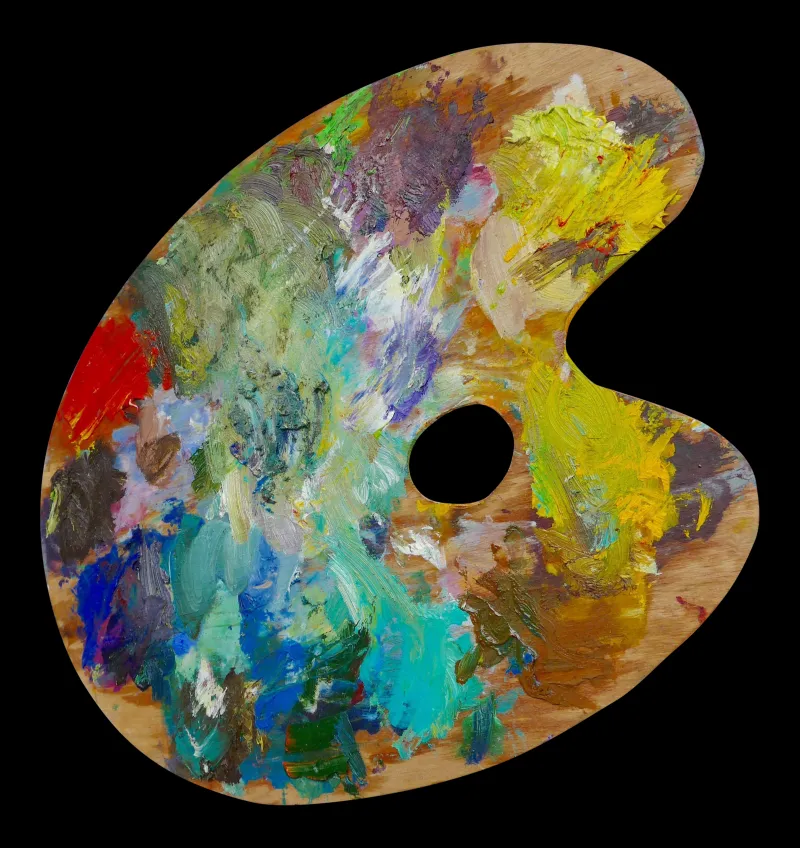
Photo: PriceLomonte, CC BY-SA 4.0, via Wikimedia Commons
There is a moment in many studio conversations when someone looks at a painting, then at the price list, then back at the painting, and says, carefully, 'Can I ask what goes into the price?' It is not a rude question. It is a sensible one. But artists sometimes answer it as if they have been asked to justify their entire personality, and collectors sometimes ask it as if they are hoping to hear that the canvas was free and the hare painted itself. Neither response helps anybody.
So here is the plain version. A price is not a measure of how much the artist likes the painting, or how good they think they are, or whether they got out of bed on the right side. It is a working number. It has to cover the making, the showing and the living, and it has to make sense across a whole body of work. That does not make it arbitrary. It makes it complicated.
The price list is not a personality test
Two paintings can be the same size and carry very different prices, and neither artist is being cheeky. One may be on linen rather than cotton canvas, with a hand-made frame and three layers of a costly ground. The other may be a quick study on board, made in an afternoon, unframed, and priced to sell at a village hall show. The difference is not a verdict on the painter's soul. It is a difference in cost, time and context.
Collectors often assume size is the main driver. It is one factor, but it is not the whole story. A small painting can take weeks of layering and revision. A large one can come together in a happy rush. The price tends to follow the work, not the tape measure.
Materials: the quiet line items
Start with what the painting is made of. A decent stretched canvas, good brushes, artist-quality paint and a proper ground are not cheap in the UK, and the costs add up quietly. Linen costs more than cotton. Some pigments cost more than others. A large board may need bracing. A panel may need sealing. If the work is framed, the frame is a real cost too, especially if it is bespoke and made by someone who knows what they are doing.
Then there are the unglamorous bits: masking tape, sandpaper, gloves, palette knives, the jar that keeps the water clean, the studio heater that makes the paint behave in February. None of these appear on a price list, but they are all part of the number. When an artist says a painting is £450, they are not simply charging for the bit you can see. They are charging for the bit that made the bit you can see possible.
Time, attention and the bits nobody sees
Studio time is the hardest thing to price honestly. A painting may take two days or two months, and the finished surface rarely tells you which. There is the time at the easel, but there is also the time spent looking, correcting, scraping back, starting again, and walking away because the light has changed.
For many artists, studio time is not billed by the hour. If it were, every painting would be priced like a small car. Instead, the price has to reflect a fair return across a year of work, including the pieces that do not sell and the experiments that go nowhere. That is not a sob story. It is how a working practice stays working.
Framing, transport and the exhibition tax
Showing work costs money. There may be hall hire, insurance, hanging materials, transport, parking, and a van borrowed from a friend who needs it back by four. There may be entry fees for open exhibitions and commission taken by a gallery. There may be a courier, a crate, or a very careful journey on the train with a painting wrapped in bubble wrap and hope.
These costs do not all land on one painting. But they land somewhere. A price list is partly a map of those journeys. When you buy from an exhibition, you are not just buying the object; you are buying a small piece of the operation that got it onto the wall in front of you.
Why two same-size paintings can be £300 apart
Imagine two hare paintings, both 40 by 50 centimetres. One is a finished studio work on linen, framed in oak, shown in a gallery with a printed catalogue and a private view. The other is a quicker piece on canvas board, unframed, shown in a church room with a tea urn and a raffle. The first may carry a higher price because it cost more to make, took longer, and is being shown in a context with higher overheads. The second may be priced lower because it is a study, because it is unframed, or because the artist wants it to find a home at that particular show.
Neither price is a trick. They are different objects in different circumstances. The useful question is not 'why is that one cheaper?' but 'what am I actually comparing?' Materials, framing, provenance, exhibition history and the artist's own pricing structure all matter.
How to ask without the awkwardness
If you want to understand a price, ask plainly and without apology. 'Could you tell me what the price includes — is the frame part of it?' is a perfectly good question. So is 'Is this part of a series, or a one-off study?' and 'Do you have a payment plan for larger pieces?' Artists would much rather answer those than watch someone guess.
What tends not to help is opening with 'I could get a print for less' or 'My nephew paints too.' You are not comparing like with like, and the artist has heard it before. Be direct, be curious, and be prepared for the answer to be 'that is the price.' A transparent conversation does not always end in a discount. It ends in understanding, which is worth having either way.
What a fair price actually buys
A fair price buys the painting, yes. It also buys the artist a bit more time to make the next one. It keeps a working practice alive, pays for the materials that failed, and supports the slightly mad decision to keep showing up at the easel. That is not a reason to buy something you do not love. It is simply the context behind the number.
So next time you see a price list at a small show or a gallery, read it as a working document rather than a challenge. Ask the question. Listen to the answer. Then look at the painting again. The number and the image are not enemies. They are two parts of the same story, and both deserve a clear-eyed look.