The Chair-Row Welcome: Why Village Hall Shows Deserve Your Saturday
On a damp Saturday in November, the best art show in the county might be behind a pair of swing doors, past a noticeboard advertising yoga and a lost cat, and up a slight slope where the carpet has never quite decided on a colour. There will be a trestle table. There will be a tea urn. There will almost certainly be a laminated sign asking you not to touch the paintings, positioned at the exact height of an curious eight-year-old. And there will be art — real art, made by people who live nearby, shown to neighbours, friends, strangers and whoever else happens to come in out of the rain.
I have spent plenty of time in white-walled galleries with beautiful lighting and a guest list, and I am not about to pretend those rooms do not matter. They do. But the village hall exhibition occupies a different place in the UK art ecology, and it deserves more than a polite nod. It is where many artists learn how to show work. It is where many collectors see their first original painting in the flesh. It is where the question 'how much is that one?' is asked without a flicker of embarrassment, usually while someone is pouring milk into a mug.
The room does half the work
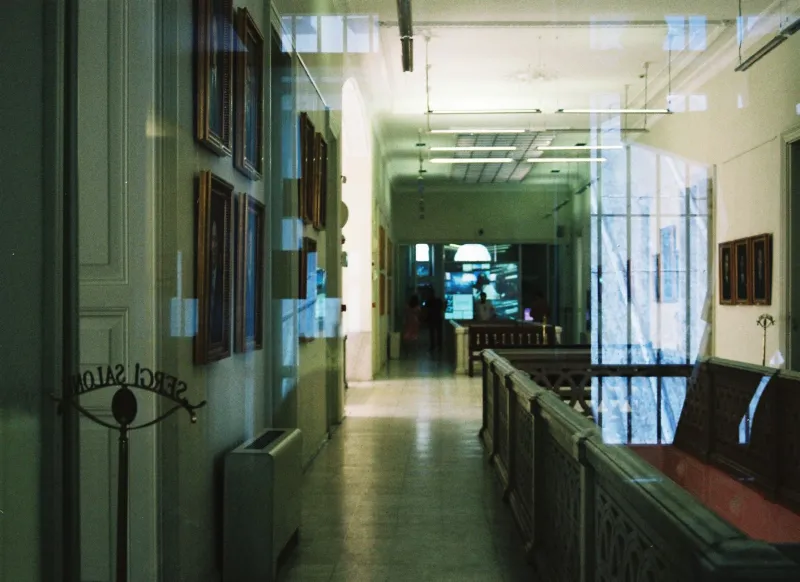
A community venue does not try to disappear behind the art. It has radiators that clank, a stage curtain that smells faintly of school plays, and windows that turn a painting into a mirror at four o'clock. None of that is ideal for a catalogue photograph. All of it is useful for looking.
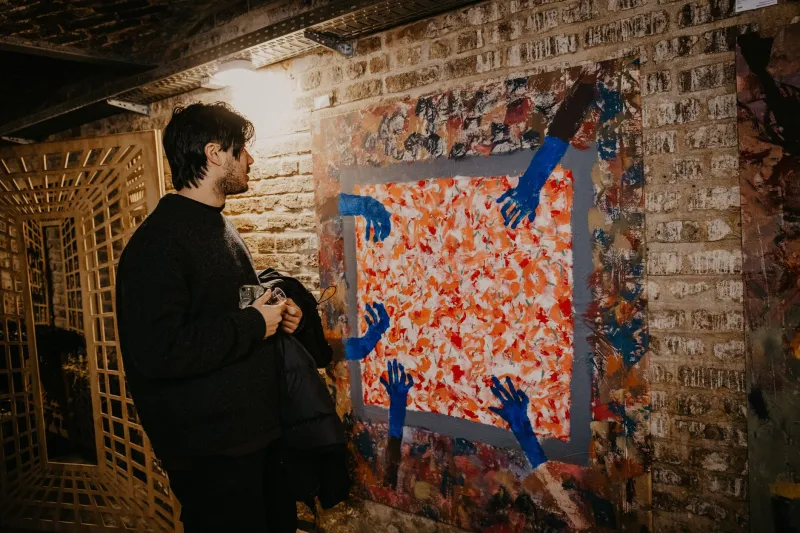
In a less polished room, the gap between the art and the everyday closes. You see a hare painting next to a poster for the parish council and you understand, immediately, that the painting belongs to a life rather than a lifestyle. You can stand back, stand close, and stand there for a while without feeling that you are blocking someone's shot for a magazine. The stakes feel lower, which — counterintuitively — makes the looking more serious. People linger. They tilt their heads. They ask what the blue is made from. They bring their mum.
Conversation over catalogue
At a city private view, conversation often has a job to do. It is networking with a glass of something cold in its hand. At a village hall show, conversation is more likely to be about the weather, the bus route, a dog, and then, eventually, the work. That is not a failure of focus. It is a different route in.
Some of the most useful things anyone has ever said to me about a painting were said beside a tea urn. Not because the person had a gallery or a collection, but because they had been looking at the same fields and rooftops for forty years and could tell me when the light was wrong. Local curiosity is underrated. It is not the same as polite praise. It asks why the sky is that particular grey, why the frame is oak instead of white, why the hare is facing left. Those questions keep an artist honest.
A different kind of attention
There is a particular sort of attention that small shows encourage: less polished, more personal, and often more patient. People come in because they are already in the building for something else — a coffee morning, a choir practice, a jumble sale — and then stay for the paintings. That accidental audience is gold. They have not come to be seen at an art event. They have come to look, or to be persuaded to look, and that makes their response unusually direct.
For collectors, this is a useful place to train the eye. You can compare five works by the same artist without a queue behind you. You can ask about materials, framing, whether a piece is available, and whether the artist would mind if you came back tomorrow with your sister. You can see how a painting behaves in ordinary light, near a door, above a stack of chairs. That is not a compromise. It is research.
What the tea urn teaches us
Small exhibitions are also a reminder that the art world is not a single ladder. It is a network of rooms, many of them hired by the hour, with a key collected from someone's porch. Artists pay for those rooms. They carry the paintings in themselves, borrow the easels, make the signs and sit behind the table for two days. There is a kind of generosity in that which does not always survive the trip to a bigger city space.
At Kay Hare Art, my own exhibition notes are full of these rooms: the church hall with the stubborn radiator, the community centre where the hanging rail was exactly two inches too high, the village show where a man told me he had never bought art before and then did. Those shows are not a warm-up act for the real thing. They are the real thing, happening quietly, all over the UK, most weekends of the year.
Go on purpose
So next time you see a hand-drawn poster for an art show in a church room or a village hall, treat it as an invitation rather than a curiosity. Go in. Sign the book. Ask a question that is not 'did you paint this yourself?' Buy a postcard if you cannot buy a painting. Tell the artist which one you kept looking at. The room may be imperfect, the lighting may be honest, and the tea may be strong enough to strip a brush. But the attention you find there is often the least polished and most valuable kind in the country.
And if you are a collector who usually waits for the city gallery email, try a Saturday instead. Take a fiver for the raffle, leave your expectations at the door, and see what happens when art is shown where people already are. The chair rows are not glamorous. They are welcoming, which is harder to fake and much more worth your time.