Before the First Footstep: Making the Most of a Gallery’s Early Hour
The hour before the crowd
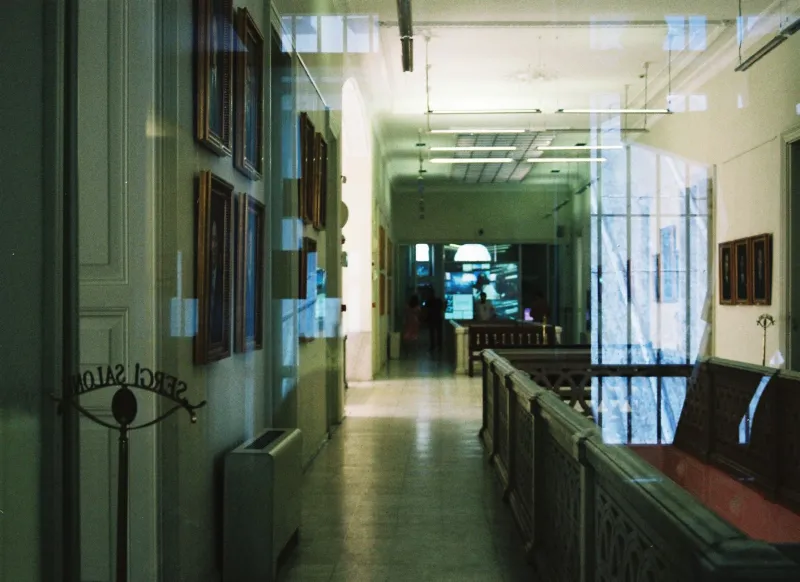
There is a particular sound to a gallery at 9.55 on a Tuesday morning. It is not silence exactly. It is the building waking up: a door easing shut, an invigilator’s radio murmuring, a cleaner’s trolley somewhere far off, the low hum of lights that have been on for an hour already. If you have ever arrived early for a show, you will know it. The paintings are the same paintings they will be at noon. But the room is not the same room.
I have spent enough time on both sides of a private view to know that the best gallery conversations rarely happen in the middle of a crowd. They happen in the first hour, when the doors are open but the day has not yet filled up. That is the quiet hour. It is not a secret, exactly. It is just a scheduling choice that more people could make.
Why a quieter room changes the work
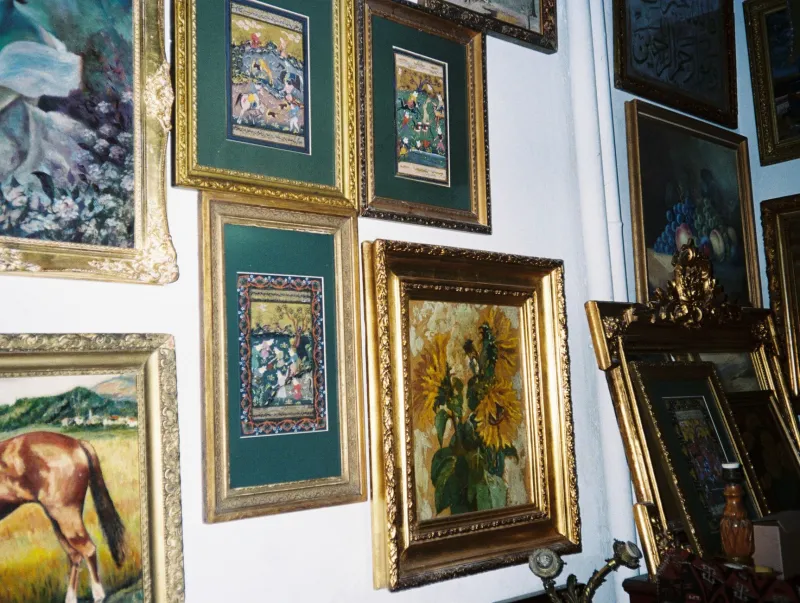
A painting needs a certain amount of time to become legible. In the studio I can live with one canvas for weeks, noticing a change in the glaze on a Tuesday and a problem with the edge on a Friday. In a gallery, most of us give a painting about four seconds. We read the label, take a photograph, move on. The early hour slows that down. With fewer bodies in the room, you stop scanning for the next thing and start looking at the thing in front of you.
Silence is an underrated part of seeing art well. It is not that sound is the enemy. It is that noise gives the eye too many places to go. In a quiet room, you begin to notice the bits that usually get lost: the underdrawing showing through a thin passage of paint, the way a frame casts a shadow, the difference between a hard edge and a soft one. Those are not trivia. They are the actual experience of looking.
A UK gallery-goer’s checklist for 2026
Quiet visits are made, not found. A little planning goes a long way. Here is the checklist I use when I want to see a show properly in the UK in 2026.
- Check the opening time on the gallery’s own website. UK galleries do not all open at the same hour. Some open at 10, some at 9.30, some have member-only early slots. Last entry matters too. Do not trust a third-party listing that was updated last spring.
- Aim for the first slot, not the first free slot. If the exhibition uses timed tickets, book the earliest one you can comfortably reach. If it does not, arrive ten or fifteen minutes before opening and be ready to walk in rather than queue for coffee.
- Choose the day with care. Midweek is usually calmer than Saturday. Check school half-term dates, bank holidays and any big local event. A quiet Tuesday can become a coach-party Wednesday without much warning.
- Plan the journey backwards from the door. Rail delays, bus changes and the walk from the station all eat into the quiet hour. If you are coming into London, the first trains are often less crowded but not always reliable. Build in a buffer. A rushed arrival is not a quiet one.
- Travel light. A small bag, glasses if you need them, a notebook if you are that sort of person, and no shopping. Cloakrooms are useful but not infinite. You want your hands free and your attention uncluttered.
- Start with the work, not the shop or the wall text. Do one slow lap of the first room before you read anything. Let the paintings set the agenda. You can always go back for the labels.
- Turn your headphones off. This sounds obvious. It is not. A podcast is a wonderful thing, but it is a different room in your head.
What to notice first
If you are not sure how to use the quiet hour, try this. Pick one painting. Stand far enough back to see the whole thing, then close enough to see the surface. Give it ninety seconds. That is longer than it sounds. Then ask yourself three questions: where is the light coming from, what is the painter’s hand doing, and where does my eye keep resting? Only then read the label.
You will be surprised how often the label answers a question you had not thought to ask, and how often it misses the thing you actually saw. Both are useful.
The conversations you came for
The quiet hour is not anti-social. It is social at a lower volume. Front-of-house staff often know more about the show than anyone else in the building. They have seen it every day for weeks. Ask them which work changes most in the morning light, or which corner people always miss. You may get a better answer than the catalogue gives you.
There is also the conversation with another early visitor: the shared nod in front of a painting you both cannot leave. It is a small thing. It is also the reason galleries are public buildings rather than storage rooms.
A note for 2026
The UK exhibition calendar in 2026 is already filling up. Block out one morning rather than one afternoon. Check the opening times, book the earliest ticket, leave the headphones at home and give the paintings a bit more than four seconds. The quiet hour is not a luxury. It is one of the cheapest ways to see more.